Accused of Using AI Art? How to Respond
If you are accused of using AI art, wait an hour, reply once and briefly, then show how the piece was made: a short timelapse clip, two or three work in progress stages, and a screenshot of your named layers. Send the same evidence through any formal appeal route, keep the layered master private, and record dates and outcomes.
It usually starts with a comment. Someone looks at a piece you spent a week on and writes that it is obviously generated. Others pile in. Being accused of using AI art feels personal because it is: it questions the part of the work that is most yours. This guide is a calm, practical playbook for that moment, and it sits inside the process and provenance pillar because the answer is always the same: show the process. It also works for anyone helping an artist through it, such as a contest organizer or a client.
Do not argue about how the picture looks. Show how it was made. Process settles what opinions cannot.
First, step away from the comments for an hour
The instinct is to reply at once and at length. Resist it for an hour. Long, angry replies read as defensive, and they rarely change anyone's mind. What changes minds is evidence, and gathering it takes a few minutes of calm work.
If the accusation came through a formal channel, such as a contest email or a marketplace notice, read the exact wording twice and note any deadline. Appeal windows are short, often seven to fourteen days, and a missed deadline is harder to fix than a rude comment.
A calm, evidence first response in five steps
Acknowledge the question once
A single short reply is enough: you made the piece by hand and you are happy to show the process. Two sentences, no sarcasm. Polite and brief beats clever.
Share a timelapse clip
Ten to thirty seconds of a timelapse is the most persuasive single artifact, because it shows decisions happening in order, including the ones you undo. Trim it to a stretch where a shape visibly changes, such as an eye being redrawn.
Show two or three work in progress stages
The rough, the construction sketch, and a midway render. Early, messy, wrong stages are convincing precisely because a generated image has no wrong stages to show.
Show the layer panel
A screenshot of named, unmerged layers tells the story of a real painting. The stack described in layer blend modes for shading is what a hand-built image looks like from the inside.
Use the formal channel when there is one
For contests, shops, and platforms, send your evidence through their appeal or support route as well as publicly, and keep a copy of what you sent, with the date.
What to share publicly, and what to keep private
Show enough sequence that a fair reader is satisfied, without handing anyone a reusable source file.
| Item | Share publicly? | Why |
|---|---|---|
| Timelapse clip, 10 to 30 seconds, 720p | Yes | Shows decisions in order; too short and low resolution to be reused as art |
| Two or three work in progress crops | Yes | Wrong stages are the strongest evidence and cannot be faked after the fact |
| Layer panel screenshot with names visible | Yes | Proves structure; a screenshot carries no usable pixels |
| Full timelapse export | Only through a formal appeal | Long enough to be re-cut; send to a moderator, not a comment thread |
| Layered master file (PSD, PROCREATE, KRA) | No | Anyone with it can re-export, recolor and repost your piece |
| Session saves with timestamps | Describe them, share on request | Metadata can include device and location details; show a screenshot of the file list instead |
| Detector score | No | Weak either way; the same tools that flagged you are wrong in both directions |
A detector score in your favor is weak on its own, because the same tools that flagged you can misread you next week. The reasons are in why AI image detectors flag real art: polished rendering and smooth gradients are what these tools associate with generated output. Lead with process and leave scores out of it.
Three kinds of accuser and the right response to each
The same evidence works in every case. How much you offer, and where, depends on who is asking.
| Accuser | What they usually want | Right response |
|---|---|---|
| Drive-by comment | A reaction, sometimes attention, occasionally a genuine answer | One brief reply plus a timelapse clip or a work in progress strip; then stop replying. Do not answer every follow-up. |
| Moderator or contest flag | A rule to be satisfied, on a deadline, in a format they can file | Ask which rule and which evidence they accept; send the full timelapse and layered screenshots through the formal route; keep it factual and dated. |
| Client or commissioner doubt | Reassurance that they paid for hand-made work and can defend it to their own audience | Offer a short call or a written process note with three stages and the clip; add a one line hand-made statement to the delivery for their records. |
For clients, attach a process note to every delivery from now on, whether or not anyone asks. A client who holds a rough, a construction stage and a clip already has the answer if their own audience raises the question.
How to appeal a platform or contest removal
Removal decisions are often made quickly, sometimes with automated help. Appeals are read by a busy person, so structure matters more than emotion.
Quote the rule
Open with the exact rule or policy line you were judged under, copied from their page. If they did not name one, ask for it in your first sentence.
State the facts in three lines
Title of the piece, date started and finished, software used, and that a timelapse and layered file exist. No adjectives.
Attach the evidence in their format
Timelapse clip as a video file, three work in progress stages as images, and a screenshot of the layer panel. Name the files by stage number so a reviewer can follow them in order.
Offer more on request
One sentence: the full timelapse and a screen-share of the layered file are available to a reviewer. Do not attach the master itself.
Log it
Record the date sent, the ticket number, the name of anyone who replied, and the outcome.
Artists have always left a trail
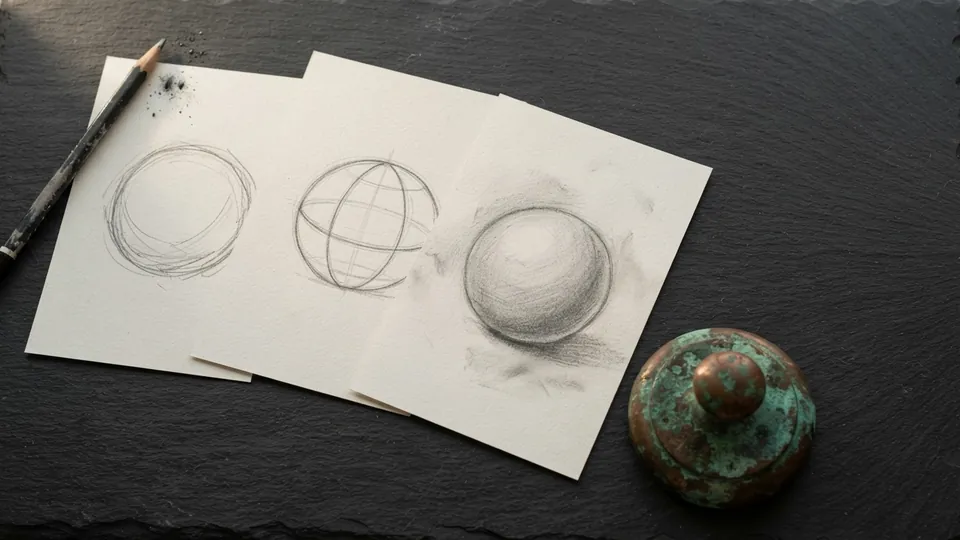
Proving process is older than generated images. The National Gallery's glossary describes a pentimento, the visible trace of an earlier idea that the painter later painted over, as evidence of the artist changing their mind at the easel.
The same glossary entry on underdrawing covers the construction beneath a finished surface, revealed by infrared study. Your saved roughs, your construction layers and the shapes you redrew in a timelapse are the digital version of the same thing. They carry the same weight, and you can show them in five minutes.
Know where your rights stand
Being accused of using a generator does not change who owns work you made by hand. In the United States, the U.S. Copyright Office has published guidance and reports on works made with AI tools, and its position rests on human authorship: the expression a person creates is what copyright protects.
If a dispute becomes serious your process record is also the evidence of authorship. Content Credentials attached at export, explained in Content Credentials and C2PA for artists, add a signed record of the software and the edits where the platform keeps them.
Make the next accusation easier to answer
The best time to prepare is before anyone asks. Turn on timelapse recording for every canvas, name your layers as you go, keep dated session saves, and add a one line process note when you post: the software, the rough brush count, and that a timelapse is available. The full habit is set out in how to document your art process.
- Record: timelapse on, layers named, a session save at the rough, the construction and the halfway point.
- Attach: Content Credentials on the export where your software supports them, and creator fields in the embedded metadata.
- Post: a work in progress crop or a short clip alongside every finished piece, so the answer is already public.
Artists who post a little process alongside finished pieces are accused far less often, and when they are, the reply takes one message. The same record protects your writing about the work, from statements to captions.
Accused of using AI art: the method in short
Wait an hour, reply once, then show the making: a short timelapse clip, two or three wrong stages, and a named layer stack. Send the same evidence through any formal route, keep the master file private, and write down what you sent and when. Being accused of using AI art is the moment a process record pays for itself. Start keeping one with the next canvas.
Common questions
How do I prove my art is not AI?
Show sequence rather than opinion. A ten to thirty second timelapse clip, two or three work in progress stages including the rough, and a screenshot of your named, unmerged layers are the strongest evidence. A generated image has no wrong stages to show.
What should I do if someone says my art is AI in the comments?
Wait an hour, reply once in two polite sentences offering to show the process, then post a timelapse clip or a work in progress strip. Do not answer every follow-up; onlookers judge the exchange by tone.
Can a platform or contest remove my art for being AI generated?
Yes, and decisions are often fast and partly automated. Ask for the specific rule and the evidence they accept, send your timelapse, stages and layer screenshot through the formal appeal route in their format, and keep a dated copy of everything.
Should I share my layered file to prove it is mine?
No. Share screenshots of the layer panel and crops of stages, and offer a screen-share to a reviewer if needed. A layered master can be re-exported, recolored and reposted by anyone who holds it.
Does a detector score prove my art is hand-made?
Not reliably. The tools that flag stylized, polished hand-made work are wrong in both directions. Lead with process evidence and treat any score as a guess about style.
Sources and further reading
Primary references for the facts and definitions in this piece, all from independent publishers:
- The National Gallery: Pentimento: traces of earlier ideas as evidence of an artist at work.
- The National Gallery: Underdrawing: construction beneath a finished painting.
- U.S. Copyright Office: Copyright and Artificial Intelligence: guidance and reports on human authorship.
This method is part of the process and provenance pillar. Pair it with How to Document Your Art Process and Content Credentials and C2PA for Artists.